Beyond Weddings: The Artful Application of Script Typography
In the world of design, typography carries a voice. It whispers elegance, shouts importance, or offers a friendly, personal touch. Among the myriad of typefaces available, script fonts occupy a unique niche, bridging the gap between formal print and human handwriting. They evoke emotion, personality, and a sense of crafted intention. One such font that exemplifies this capability is Welcome Valentine. While its name suggests a primary domain of use, the true potential of this stylish and incredibly elegant script font extends far beyond the confines of wedding stationery, revealing itself as a versatile tool for a wide spectrum of professional and personal projects.
The Anatomy of Elegance: Characteristics of a Script Font
To understand the value of a font like Welcome Valentine, one must first appreciate the defining features of quality script typography. Unlike rigid, geometric sans-serif fonts, scripts are designed to mimic the fluidity of penmanship. The letterforms connect, or appear to connect, creating a continuous flow that guides the reader's eye smoothly across the text. This connectivity requires meticulous design to ensure legibility while maintaining artistic flair. The strokes often vary in weight, with elegant contrasts between thick and thin lines that suggest pressure applied by a nib or brush.
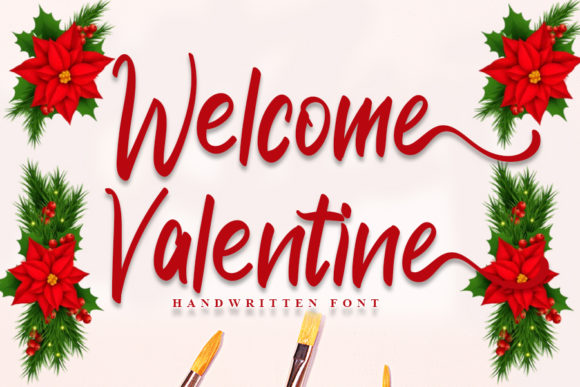
A font such as Welcome Valentine typically exhibits these characteristics with a particular grace. Its elegance is not overly ornate or difficult to read; it strikes a balance between decorative appeal and functional clarity. The uppercase letters often possess a distinctive flourish, while the lowercase maintains a cohesive, flowing baseline. This balance makes it suitable for both short, impactful phrases—like a logo or a greeting—and for slightly longer blocks of text, such as a poetic quote or a personal message on a card. The inherent handwritten touch it provides is not casual or informal scribble, but rather a deliberate, refined simulation of artistry.
The Practical Advantage: Why Elegance Works in Communication
Choosing a font is never merely an aesthetic decision; it is a communicative one. The psychology of typography tells us that style influences perception. An elegant script font conveys values: care, attention to detail, luxury, warmth, and personalization. In a commercial context, this can directly impact brand perception. For a consumer, it enhances the emotional weight of a personal message.
The practical advantage of using a font like Welcome Valentine lies in its ability to elevate ordinary material into something memorable. A standard business card with a generic font communicates information. A business card that employs a stylish script for the individual's name or the company logo immediately communicates character and class. It suggests a business that values craftsmanship and personal connection. Similarly, a digital logo for a boutique, a wellness brand, or a creative agency can leverage this elegance to stand out in a crowded marketplace where clean, minimalist fonts dominate. It introduces a human element into digital spaces.
Expanding the Canvas: Diverse Use Cases Beyond Invitations
While it looks stunning on wedding invitations—a perfectly appropriate use that aligns with its name and romantic connotations—the applications are manifold. The core principle is that any design which needs a handwritten touch is a potential canvas.
- Thank You Cards & Personal Correspondence: The personal nature of a script font makes it ideal for messages meant to convey genuine gratitude or affection. It turns a standard thank you note into a keepsake.
- Quote Graphics & Social Media Content: Creators and educators use typography to make inspirational quotes or key concepts visually engaging. Welcome Valentine can give such graphics a sophisticated, artful feel that resonates on platforms like Instagram or Pinterest.
- Branding Elements for Small Businesses: Hobbyists turning their craft into a business or professionals in fields like event planning, photography, or bespoke goods can use this font for logo typography, packaging labels, or promotional materials to instantly signal quality and artistry.
- Merchandise & Product Design: The font can be applied to physical products—mugs, apparel, journals—where a phrase or name is featured. It adds value through design, making the product feel custom-made.
- Creative Presentations & Educational Materials: Researchers or educators presenting on topics related to art, literature, or history might use elegant script for titles or key terms within slides or handouts to create a thematic, engaging visual tone.
A Consideration for Implementation: Legibility and Context
Employing any decorative font requires thoughtful implementation. The primary consideration is legibility. Script fonts, including Welcome Valentine, are best used for headlines, titles, names, short phrases, or highlighted text, not for long paragraphs or body copy. Overuse can strain the reader's eye and diminish the elegant effect. The key is strategic placement.
Another consideration is digital versus print. On screen, ensure sufficient size and contrast against the background. In print, particularly for items like business cards or greeting cards, high-resolution output is crucial to preserve the delicate thin strokes and flourishes of the font. Pairing is also important. An elegant script often works best when contrasted with a simple, neutral font for supporting text. This creates a hierarchy: the script provides the emotional hook, while the simpler font delivers information clearly.
Trends and Evolution: Script Typography in Modern Design
Current design trends show a renewed appreciation for personality and authenticity. In reaction to the ultra-minimalist, uniform digital interfaces of recent years, there is a growing movement to incorporate elements that feel human, unique, and warm. Script fonts fit perfectly into this trend. They offer a way to break the mold of corporate uniformity without sacrificing sophistication.
Welcome Valentine, with its specific blend of style and elegance, aligns with this desire for refined personalization. It is not a wild, graffiti-style script nor an overly formal, blackletter font. It occupies a middle ground that is widely applicable. This makes it a relevant tool for modern creators who want their work to feel both professional and personally crafted. Its use reflects a broader observation in design: that audiences respond positively to visual cues that suggest human effort and artistry, even in a digitally dominant world.
The font’s utility across both physical prints (invitations, cards, logos) and digital graphics (online ads, website headers, social posts) demonstrates its adaptability. For the business owner, it provides a consistent brand voice across mediums. For the hobbyist creating digital art, it offers a ready-made tool of artistic expression. For the consumer selecting a wedding invitation, it provides confidence in the aesthetic tone of their important event.
Final Observations on Artistic Utility
Ultimately, a resource like Welcome Valentine is more than just a typeface file; it is a design asset. Its value is unlocked by understanding its characteristics and thoughtfully applying it to projects where its inherent qualities—elegance, fluidity, a personal touch—will enhance the communication goal. It serves professionals seeking to differentiate their brand, consumers wanting to personalize life's milestones, and creators aiming to infuse their work with a specific emotional tone.
The true test of such a font is in its repeated application across different contexts, from the solemnity of a wedding invitation to the cheerful announcement of a new business, from a digital logo to a printed quote on a wall art print. In each case, it brings the same core benefit: translating digital vectors or printed ink into a feeling, an impression of careful, human-made beauty. That translation is the art of typography, and script fonts like this one are potent instruments in that art.