The Quiet Power of Bartond Script: A Modern Standard for Creative Workflows
The tools we choose to build our ideas are not just utilities; they are extensions of our creative intent. In a landscape saturated with options, a select few emerge not through loud proclamation, but through consistent, reliable performance across a spectrum of challenges. Bartond Script represents this quiet power. It is a versatile typeface and design system engineered not for a single niche, but to serve as a foundational element in a wide array of professional, creative, and commercial projects. Its growing adoption speaks to a shift in how professionals approach their craft: a move towards integrated, adaptable tools that prioritize clarity and cohesion over ornamental novelty.
Defining Bartond Script: More Than a Font
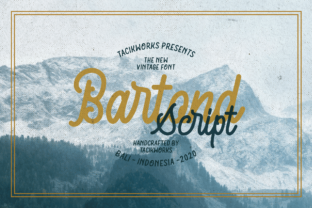
At its core, Bartond Script is a carefully balanced script typeface. However, categorizing it merely as a "font" undersells its function. It is a comprehensive design system built with specific typographic principles. Its letterforms strike a deliberate balance between stylistic character and functional readability. The strokes possess a natural, fluid quality reminiscent of expert handwriting, yet they are constructed with geometric precision to ensure consistency across weights and scales. This duality is its first major strength: it carries expressive warmth without sacrificing the legibility required for professional communication.
Furthermore, Bartond Script is designed with extensive ligatures, alternate characters, and contextual adjustments. These features are not mere decorative extras; they allow the typeface to adapt its behavior based on the letters it combines with, creating a more authentic and connected flow. This makes Bartond Script a dynamic partner in design software, responding intelligently to the input of the user to produce optimally crafted text.
Alignment with Contemporary Professional Trends
The relevance of Bartond Script is inextricably linked to several converging trends in professional and creative work.
The Demand for Authentic Brand Voice
Today's market, across both consumer and business sectors, shows a pronounced preference for brands that communicate with authenticity and human touch. Overly sterile, corporate typography can create distance, while overly casual scripts may undermine authority. Bartond Script occupies a crucial middle ground. Its refined yet approachable aesthetic allows brands—from boutique consumer goods to innovative tech startups—to establish a visual voice that is both trustworthy and personable. It supports the trend towards brand humanization, where companies seek to connect on a more relatable level without diluting their professional standing.
The Convergence of Media and Contexts
A modern project rarely exists in one medium alone. A brand identity must seamlessly translate from a mobile app interface to a printed brochure, from a social media video to a physical product label. Professionals need typefaces that perform reliably in all these contexts. Bartond Script is engineered with this multi-environment durability. Its clarity holds up on low-resolution screens, its elegance enhances print materials, and its stylistic weight can anchor motion graphics. This versatility addresses the changing workflow expectation of creators who must design for an omnichannel world.
The Efficiency of Integrated Systems
In fast-paced professional environments, efficiency is born from cohesion. Using a disparate set of specialized fonts for different tasks—one for logos, another for body text, another for headlines—creates friction and visual inconsistency. Bartond Script, with its range of weights and built-in stylistic sets, offers a system within itself. A designer can establish a complete visual hierarchy—from bold headlines to fine captions—using a single, coherent family. This simplifies decision-making, accelerates production, and guarantees a unified output, which is particularly valued by freelancers, small teams, and entrepreneurs managing their own brand assets.
Practical Applications: Where Bartond Script Excels
Observations from real-world implementation highlight its adaptability.
In entrepreneurial and small business branding, Bartond Script often serves as the primary brand typeface. Its ability to function as a logo (using its distinctive ligatures and swashes) while also cleanly setting website body text provides immense cost and time efficiency. A coffee shop might use its heavier weight for the shop sign and its lighter, refined weight for menu descriptions, creating a familiar yet sophisticated atmosphere across all touchpoints.
Within digital product design, specifically for apps and websites aiming for a premium yet friendly user experience, Bartond Script finds use in key UI elements. Its excellent screen rendering makes it suitable for feature headlines or navigation labels that require a slight tonal elevation beyond a standard sans-serif, adding character without impairing usability.
For content creators and marketers, the typeface is a powerful tool for creating standout visual content. Social media graphics, email campaign headers, and video title cards benefit from its expressive potential. The availability of alternates allows creators to customize phrases for visual impact, making each piece feel deliberately crafted rather than generically assembled from template libraries.
A Reflection of Larger Developments in Design Technology
The attention paid to tools like Bartond Script mirrors a broader maturation in digital design. The early web was marked by a scarcity of reliable typefaces, leading to a period where novelty often trumped utility. Now, with access to thousands of fonts, the problem has inverted. The challenge is curating and selecting tools that offer sustained value, reduce complexity, and elevate work consistently. Bartond Script answers this challenge by being a high-value default—a choice that professionals can make at the start of a project with confidence that it will serve them well through to completion, across multiple deliverables.
It also connects to the growing importance of semantic and contextual design in software. The fact that Bartond Script's OpenType features can automate letterform adjustments based on context is a micro-example of a larger principle: tools should be smart enough to assist the creator, handling routine optimizations so the human can focus on intent and concept. This forward-looking aspect makes it not just a static asset, but an interactive component within modern design applications.
Why It Resonates with Modern Professionals
The ultimate reason Bartond Script garners attention is that it aligns with the evolved priorities of its audience. Professionals, creators, and entrepreneurs today are often tasked with doing more with less—less time, less budget, sometimes less team support. They need tools that are:
- Multi-disciplinary: Reducing the need to learn and manage numerous specialized tools.
- Quality-consistent: Delivering a high-standard output whether the project is large or small.
- Authentic: Helping to forge a genuine connection with their own audience or client.
- Streamlined: Integrating smoothly into increasingly connected workflows across design, development, and marketing platforms.
Bartond Script, through its thoughtful design and broad capability set, meets these needs. It is a testament to the idea that in a complex digital ecosystem, the most powerful tools are often those that provide a simple, robust, and adaptable foundation. They empower the professional to build upon them with confidence, knowing the foundation itself will not falter, whether the project is a personal portfolio, a global campaign, or the identity of a next-generation startup.
As workflows continue to converge and the demand for cohesive, authentic communication grows, the value of such integrated systems becomes even more apparent. Bartond Script exemplifies this direction, offering not just a set of characters, but a reliable partner for the multifaceted nature of modern creative work.